Rome Travel for First-Timers: Five Steps
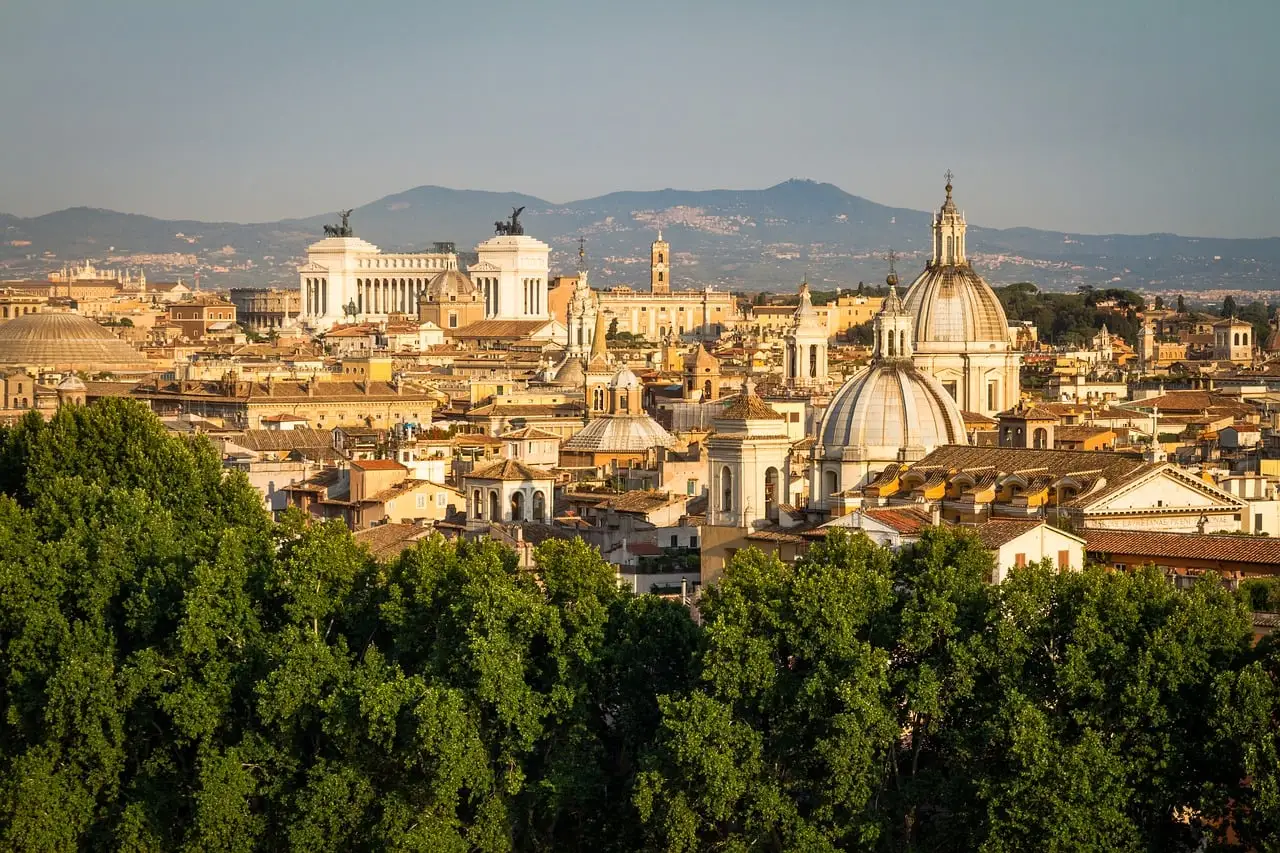
Rome travel works best when you pick your month first, book the Colosseum and the Vatican ahead, and do the rest on foot and by metro. Rome is a big city, but most first-time sights sit close together. This guide gives you five steps in the order you will need them, with prices, hours and rules from official pages.
Step 1: Plan your Rome travel month
Choose April, May or September if you can. The World Meteorological Organization's Rome climate table shows an average daily high of 17.7 °C in April, 22.8 °C in May and 26.5 °C in September. July and August reach 30.3 °C and 30.6 °C. January averages 11.9 °C.
Heat changes your day more than anything else. In July and August, plan sights for the morning and rest in the afternoon. In winter, the sights keep shorter hours. From 25 October 2026 to 28 February 2027, the Colosseum opens at 8:30 and closes at 4:30 pm, with last admission at 3:30 pm.
Our best time to visit Rome guide covers every month. No official page says how many days a first trip needs. The Colosseum with the Forum and Palatine and the Vatican Museums each take their own timed entry, so plan them on two separate days. Roma transport tickets come in 24h, 48h and 72h versions. If you wonder how long to stay, read how many days in Rome next.
Pro Tip The Colosseum is free on the first Sunday of each month. So is the Pantheon. Free days can mean longer lines, so pick one only if the price matters more than the wait.
Step 2: Get around Rome by metro, bus and on foot
Walk the centre and use the metro for the longer hops. The old centre is compact, and the main sights sit within a few kilometres of each other. Metro lines A, B and C start at 5:30. The last trains leave at 23:30 Sunday to Thursday and at 1:30 on Fridays and Saturdays, according to Roma Servizi per la Mobilità.
A single BIT ticket costs €1.50 and is valid for 100 minutes from the first validation. The Roma 24h ticket costs €8.50, the 48h ticket €15 and the 72h ticket €22. The 24h ticket pays for itself from the sixth single ride in one day. You can buy both by tapping a contactless card at metro gates and on buses.
One thing is not covered. The 24h ticket does not include Trenitalia's non-stop Leonardo Express, so buy that ride separately. It runs from Termini to Fiumicino airport in about 32 minutes for €14, with departures every 15 minutes, per Trenitalia. Four tickets on one booking cost €40, and Metrebus tickets are not valid on it. Rome's fixed taxi fare from Fiumicino to the old centre is €55. The Trenitalia page does not list other ways to reach the city, such as regional trains or buses, so check the airport operator's page for those.
For lines, stops and tickets in more detail, see our Rome public transport guide.
| Step | What to do | What to watch for |
|---|---|---|
| 1. Pick the month | Aim for April, May or September | Heat of 30 °C or more in July and August |
| 2. Get around | Walk the centre, use the metro for long hops | Roma 24h does not cover the Leonardo Express |
| 3. Book the big sights | Colosseum and Vatican first | Named tickets, fixed time slots, dress code |
| 4. Choose a base | Stay near a metro line | Tourist tax per person per night |
| 5. Budget the trip | Count tickets, transport and meals | Fees change, so check before you go |
Step 3: Book the Colosseum and the Vatican ahead
Book the Colosseum and the Vatican Museums before you fly, and plan the rest as you go. These two sights have timed or crowded entry, and the others usually do not.
The Colosseum's official 24h ticket costs €18. It gives one timed entry to the Colosseum, plus one entry to the Roman Forum and Palatine within 24 hours. Tickets go on sale 30 days before your visit, and they carry your name. The Colosseum's ticket page says the booked time cannot be changed and advises you to arrive 15 minutes early. Bring an ID with your ticket.
For a guide, the Colosseum arena floor, Palatine and Forum tour is run by Ivo Tours. It costs from €39 per person, takes 2.5 to 3 hours and is rated 4.5 from 29,538 reviews. Free cancellation is offered. The tour meets at Via delle Terme di Tito 93, and the listing offers private or small groups without a group size. The price does not cover food and drinks, transfers or access to the underground floor. It is not suitable for people with mobility impairments or wheelchair users. For more options, see our Colosseum tours.
The Vatican Museums open Monday to Saturday from 8:00 to 20:00, with last entry at 18:00. They are closed on Sundays, except the last Sunday of the month, when entry is free from 9:00 to 14:00. A full ticket costs €20 at the door, and online booking adds €5, according to the Vatican Museums. The only official ticket site is tickets.museivaticani.va.
The Vatican Museums entrance ticket is sold by GetYourGuide Tours & Tickets GmbH. It costs from €33, rated 4.5 from 159,306 reviews, and it has no free cancellation. It is an entry ticket, so there is no guide or pickup. The listing gives only the Vatican Museums as the location, with no separate meeting point and no group size. It includes the booking fee and an audio guide if you choose that option. It does not include a guided tour, a ticket to St Peter's Basilica or the dome of St Peter's. The basilica is free, but entry is not guaranteed because of crowd control. More details are in our Vatican Museums tickets guide.
Prices and ratings as shown on GetYourGuide on 25 October 2026.
Cover your shoulders and knees at the Vatican. The museums do not allow sleeveless tops, shorts above the knee or hats. St Peter's Basilica is free to enter, but it has a security check first. Allow time for the line.
Some smaller sights have their own rules:
- Pantheon: €7 since 1 July 2026, with no skip-the-line option, per the Ministry of Culture.
- Trevi Fountain: a €2 fee applies to the basin area closest to the fountain, according to Roma Capitale's tourism site.
- Borghese Gallery: reservation is required for every ticket.
Key Takeaway On a first trip to Rome, book two things ahead: the Colosseum, which goes on sale 30 days before, and the Vatican Museums, which are closed on most Sundays. Everything else you can add as the days unfold.
Step 4: Choose a base near a metro line
For a first visit, stay in the Centro Storico, where most sights are a walk away. Trastevere is quieter in the evening. The area near Termini station is practical for trains and the airport ride.
Four hotels in these areas are rated 8.0 or higher on Booking.com:
- Hotel Albergo Santa Chiara is by the Pantheon, a 5-minute walk from Piazza Navona.
- TB Place Roma is near the Spanish Steps, a short walk from the Trevi Fountain.
- Dany Guest House is on Piazza di Santa Maria Maggiore, 700 metres from Termini.
- Hotel La Rovere is in Trastevere, a 14-minute walk from Campo de' Fiori.
Rome also charges a tourist tax. For a 4-star hotel it is €7.50 per person per night, for up to 10 nights, according to the city's published rates. The hotel collects it. Our guide on where to stay in Rome compares the areas in full.
Step 5: Budget your Rome trip
Add up tickets, transport and meals before you book, so the total holds no surprises. Official tickets give you the fixed part: €18 for the Colosseum, €25 for the Vatican Museums online and €7 for the Pantheon. Transport is €8.50 a day if you ride often. Meals are the part that varies most, and no official page gives a daily food figure. As a guide, a Colosseum day with the Roma 24h ticket costs €26.50 (€18 plus €8.50) before meals, and a Vatican day costs €33.50 (€25 plus €8.50). No official page gives a typical daily total, so we do not state one.
For the full picture, see food cost in Rome and what else adds up. Things to Do in Rome's count of GetYourGuide listings in October 2026 found 73 entry tickets, from €7.
When your feet are tired, a guided ride can fill a first afternoon. The City Highlights bike or e-bike tour is run by Fat Tire Tours - Italy. It takes 3 hours and is from €45 per person, rated 4.8 from 823 reviews, with free cancellation. It meets at Via dei Delfini 35, and the listing gives no group size and no list of exclusions. It is not suitable for pregnant women.
The City Highlights golf cart tour is run by Loving Rome. It takes 2 to 3 hours and is from €59 per person, rated 4.8 from 1,231 reviews. The group is up to 7 people, private or small group depending on the option, and it starts at Piazzale del Museo Borghese. Wheelchair users and children under 3 are not suited to it. Entry tickets to the sights, hotel pickup, food and drink, audio guides and tips are not included.
Both belong to a wider set of Rome tours picked for first visits.
Prices and ratings as shown on GetYourGuide on 25 October 2026.
A first trip to Rome goes best when you book two sights and leave the rest open.
When this plan is the wrong fit
A first-timer plan is the wrong choice if you want a slow trip to one neighbourhood or a short stop on the way to somewhere else. In that case, skip the list and pick a single sight. A guided tour is the wrong choice on a day when you want to wander, because it fixes your time and your route. For a first trip, one guided day is enough, and the Colosseum is the best fit because it has a fixed entry time anyway. Do the rest on your own with a metro ticket and a walking route.
Safety and day trips are not covered here. For safety, read is Rome safe. For a trip out of the city, see day trips from Rome. If you are still deciding whether the city suits you, is Rome worth visiting weighs it up.
Pick one guided day for your first trip
For a first visit, the Colosseum arena floor, Palatine and Forum tour is from €39 and the Vatican Museums entrance ticket is from €33. Take a guide for the Colosseum and go alone for the rest. The Colosseum tour meets at Via delle Terme di Tito 93 and offers private or small groups, with no group size listed. The city highlights bike tour is from €45 and meets at Via dei Delfini 35, with no group size listed. A golf cart tour for up to 7 people is from €59 and meets at Piazzale del Museo Borghese.
-
Colosseum arena floor, Palatine and Forum guided tour
from €39 per person
The one sight to book first, with a guide for the story of the place.
2.5–3 hours 4.5 (29,538 reviews) Free cancellation
Run by Ivo Tours · not suitable for people with mobility impairments, wheelchair users
Check availability: Colosseum arena floor, Palatine and Forum guided tour on GetYourGuide -
Vatican Museums entrance ticket
from €33 per person
The standard first-visit ticket for an indoor day.
2–5 hours 4.5 (159,306 reviews)
Sold by GetYourGuide Tours & Tickets GmbH · not suitable for children under 7 years
Check availability: Vatican Museums entrance ticket on GetYourGuide -
City highlights bike or e-bike tour
from €45 per person
A relaxed way to see the centre and get your bearings.
3 hours 4.8 (823 reviews) Free cancellation
Run by Fat Tire Tours - Italy · not suitable for pregnant women
Check availability: City highlights bike or e-bike tour on GetYourGuide -
City highlights golf cart tour
from €59 per person
A seated tour for tired feet or a small group of up to 7.
2–3 hours 4.8 (1,231 reviews) Free cancellation
Run by Loving Rome · not suitable for children under 3 years, wheelchair users
Check availability: City highlights golf cart tour on GetYourGuide
Prices and ratings as shown on GetYourGuide on 25 October 2026.
Rome tours: walking, night and private toursFAQ
How do I get around Rome by public transport?
What's the best time to visit Rome?
How many days do you need for a first trip?
What should I see in Rome?
Conclusion
For a first trip, pick a mild month, book the Colosseum slot as soon as it opens, and keep the Vatican for a Monday to Saturday. Stay near a metro line, walk the centre, and ride the metro for the longer hops. Check every hour and price on the official page before you go, because Rome changes fees and hours often.
Related guides
Sources
- Parco archeologico del Colosseo, Opening times and tickets (2026), last checked 25 October 2026
- Vatican Museums, Opening hours (2026), last checked 25 October 2026
- ATAC, Roma 24h, 48h and 72h tickets (2026), last checked 25 October 2026
- World Meteorological Organization, World Weather Information Service: Rome (2026), last checked 25 October 2026
- Roma Servizi per la Mobilità, Metro and rail lines and hours (2026), last checked 25 October 2026
- Trenitalia, Leonardo Express (2026), last checked 25 October 2026
- Parco archeologico del Colosseo, 24h Colosseum, Roman Forum and Palatine ticket (2026), last checked 25 October 2026
- Vatican Museums, Fares and tickets (2026), last checked 25 October 2026
- Roma Capitale, Tourist contribution rates (2023), last checked 25 October 2026
- Turismo Roma, Trevi Fountain entry fee (2026), last checked 25 October 2026
- Ministero della Cultura, Pantheon (2026), last checked 25 October 2026