How Many Days in Rome: What Each Cut Costs You
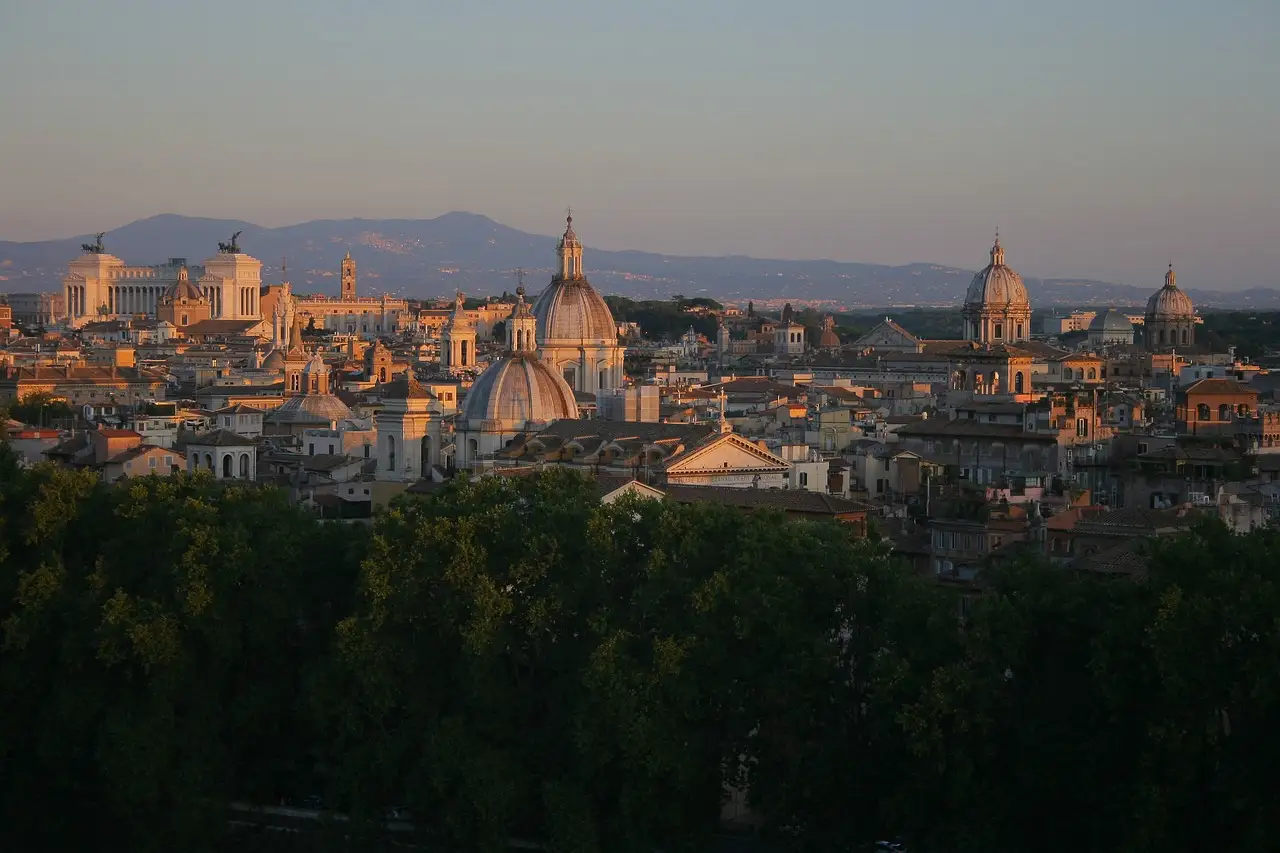
Three full days is the best answer to how many days in Rome for most first visits, and four days works better if you want one day trip. Each day can hold one big sight in the morning and a slow walk in the afternoon. This guide shows a plan for 2, 3, 4 and 5 days and tells you what you lose when you cut a day.
How many days in Rome: the short answer
Three full days is the best fit for most first visits to Rome. That is enough for the Colosseum, the Vatican Museums and one more area at a calm pace. Two days work if you accept a short list, and four or five days work if you want day trips.
Count full days, not nights. A day you land at noon or leave at breakfast is a half day, so a trip with two nights is usually one and a half sightseeing days. Add the half days to your plan before you pick a number.
Each cut has a price. The table shows what you keep and what you lose at each length.
| Step | What to do | What to watch for |
|---|---|---|
| 1. Count | Work out your full days | Arrival and departure days are half days |
| 2. Two days | Colosseum and Vatican only | You lose Borghese, the quiet streets and every day trip |
| 3. Three days | Add the old centre and one museum | You lose day trips and slow evenings |
| 4. Four days | Add one day trip | You lose time at the city sights, unless you skip a second museum |
| 5. Five days | Add a long trip or a slow day | You pay for another night and the tourist tax |
| 6. Kids | Keep one anchor a day | Pace matters more than the number |
| 7. Dates | Check closed days | The Vatican is closed on Sundays except the last of the month |
Key Takeaway Three full days cover the Colosseum, the Vatican and the old centre. Day 4 adds one day trip, and day 5 adds a long trip such as Orvieto.
Step 1: Count your real days before you pick a number
Count the days you can spend in the city from breakfast to dinner, not the nights on your booking. If you land after lunch and leave before noon, a three night trip gives you two full days and two half days.
Use the half days for the light things. Arrival afternoon suits a walk to the Pantheon and Trevi Fountain. A morning flight home suits a late breakfast near your hotel. Keep the big timed tickets for full days.
Cost is the second thing to count. Each extra night adds the hotel and the city's tourist tax, which is €7.50 per person per night for a 4-star hotel, for up to 10 nights. If the budget decides the length, read is Rome expensive before you add a night.
Pro Tip Write down the arrival and departure hours first. A full day is only a day you can start at 9:00 and finish at dinner.
Step 2: Two days in Rome, and what you lose
Two days in Rome fit the Colosseum area and the Vatican, and little else. That plan suits a long weekend. Day one is ancient Rome, and day two is the Vatican.
For day one, the Colosseum, Roman Forum and Palatine Hill guided tour is run by Crown Tours and takes 2.5 hours. It is from €49 per person, rated 4.8 from 93,507 reviews, and it has free cancellation. It is not suitable for people with mobility impairments or wheelchair users. The listing has 2 meeting points, and which one you get depends on the option you select, so read it in the booking step. It gives no group size, only a small-group option. It excludes transportation, food and drinks, and tips. The official 24h ticket costs €18 and gives one timed Colosseum entry plus one Forum and Palatine entry within 24 hours, without a guide, so on your own you pay less and only need to book the timed slot.
Prices and ratings as shown on GetYourGuide on 25 October 2026.
For day two, the Vatican Museums entrance ticket is sold by GetYourGuide Tours & Tickets GmbH and lasts 2 to 5 hours. It is from €33 per person, rated 4.5 from 159,306 reviews, and it has no free cancellation. The listing gives the museums' own address as the meeting point and no group size. It excludes the guided tour and entry to the dome of St Peter's, and it says St Peter's Basilica itself is free but access is not guaranteed because of crowd control. The Vatican Museums are open Monday to Saturday from 8:00, and closed on Sundays except the last Sunday of the month.
Prices and ratings as shown on GetYourGuide on 25 October 2026.
With two days you lose the Borghese Gallery, the quiet streets of Trastevere and Monti, and every day trip. You can still see Trevi Fountain and the Pantheon on an evening walk. For the right ticket for each, see our Colosseum tours and Vatican Museums tickets guides.
Step 3: Three days in Rome, the best fit for most trips
Three days in Rome is long enough for the big sights, and it is the length most first visits should plan. Day three adds the old centre and one more museum, so the first two days do not have to carry everything.
Day three can start at the Pantheon, which costs €7, is free for under-18s and is open daily from 9:00 to 19:00. From there, walk to Piazza Navona and on to Trevi Fountain. For art, book the Galleria Borghese as well. Reservation is required for every ticket, visits run in 2-hour slots, and the gallery is open Tuesday to Sunday, so it is closed Mondays.
Plan the evening to be easy. The Trastevere and Campo de' Fiori street food walking tour is run by Hili srl and takes 2.5 hours. It is from €44.1 per person, rated 4.9 from 4,720 reviews, and it has free cancellation. It lists drinks as not included and says it is not suitable for vegans or people with gluten intolerance. See also our Rome food tours page.
Prices and ratings as shown on GetYourGuide on 25 October 2026.
With three days you lose day trips and slow evenings. You also have no spare day if a ticket sells out or the weather turns. For where to sleep, the Hotel Albergo Santa Chiara is by the Pantheon, with a Booking.com score of 9.0 from 1,291 reviews. Our Rome neighbourhoods guide compares the other areas.
The city rewards the traveller who plans fewer things and lingers.
Step 4: Four days in Rome, and the first day trip
Four days in Rome is not too much if you use the fourth day for one day trip. Without a trip, a fourth day is a good day to slow down, so the first three days feel less packed.
The easiest first trip is Tivoli. A fourth day is usually one of the day trips around Rome, and Tivoli is the shortest. The Villa d'Este and Hadrian's Villa Tivoli day tour is run by Enjoy Rome and lists 1.5 to 7 hours, depending on the option. It is from €65 per person, rated 4.5 from 2,490 reviews, and it has free cancellation. The listing includes the bus transfer, admission and a guide, and it is not suitable for wheelchair users. The listing has 2 meeting points depending on the option, lists no group size, and excludes pick-up and drop-off and tips, so the bus transfer runs between the villas and the meeting point, not your hotel.
Prices and ratings as shown on GetYourGuide on 25 October 2026.
Going alone is cheaper. Villa d'Este and Hadrian's Villa each cost €15, and the VILLAE pass is €30 for 72 hours. The villas' own site says to take a train from Roma Termini or Tiburtina to Tivoli, then walk or take a local bus. It gives no journey time, so check the Trenitalia planner.
Things to Do in Rome's count of GetYourGuide listings in October 2026 found 15 day trips, from €24.
To stay in the city instead, add Castel Sant'Angelo or the catacombs instead. With four days you lose time at the city sights, and you lose a day of sleeping in. For a base that suits a train day trip, the Best Western Premier Hotel Royal Santina is 200 metres from Termini station, with a Booking.com score of 8.8 from 2,847 reviews. Our public transport guide covers tickets and passes.
Step 5: Five days in Rome, and the long day trip
Five days in Rome give you room for one long day trip and one slow day. A fifth day is the point where you stop rushing, but it is also the point where Rome's big sights are done.
The long trip is Orvieto with Civita di Bagnoregio. The Bagnoregio and Orvieto day trip with wine and lunch is run by City Wonders Ltd. and takes 12 hours. It is from €94 per person, rated 4.7 from 1,569 reviews, and it has free cancellation. It meets at Piazza del Popolo, runs with up to 50 people, and includes the coach, a guide, lunch and a tasting of 5 wines. It is not suitable for people with mobility impairments.
Prices and ratings as shown on GetYourGuide on 25 October 2026.
You can also do Orvieto on your own. Trenitalia's Orvieto Link is one ticket for the regional train plus the funicular to the old town. The funicular leg is €1.30 one way, added to the rail fare. Trenitalia's page gives no journey time, so look up the train in the planner.
Pompeii is the other long trip. Trenitalia says Rome to Naples by Frecciarossa takes a little over 1 hour, and you then need a regional train to Pompeii. That makes it a full day, so pick Orvieto or Pompeii, not both.
With five days you lose nothing in the city, and the table sums up the trade.
| Days | You keep | You lose |
|---|---|---|
| 2 | Colosseum area and the Vatican | Borghese, quiet streets, all day trips |
| 3 | Plus the old centre and one museum | Day trips and slow evenings |
| 4 | Plus one day trip | Spare time in the city |
| 5 | Plus a long trip or a slow day | Two more nights of budget |
The real cost is money. You lose the money for two extra nights and the chance to see a second city on another trip. If you want a quiet base for a longer stay, the Hotel La Rovere is in Trastevere, with a Booking.com score of 8.7 from 1,086 reviews, and the Hotel Forum is in Monti, 500 metres from Colosseo Metro, with a score of 8.5 from 2,004 reviews. See where to stay in Rome for the other areas.
Step 6: How many days in Rome with kids
With kids, plan three or four days and keep one anchor a day. No official page sets a number of days for children, so this is a pacing rule and not a fact. One sight in the morning and a free afternoon works better than two sights.
Some sights help a family. The Pantheon is free for under-18s. The Borghese Gallery is free for under-18s too, but it still needs a reservation for every ticket. For children under 7, the Vatican Museums ticket listing says it is not suitable for them, so ask yourself whether that day fits your family. We hold no group size or meeting point for the Colosseum tour, and no official page sets one, so check the listing's meeting point and group details before you book with children.
A guided tour can take pressure off the day. The 2.5 hour Colosseum tour above is from €49, so check its mobility notes before you book. The Roma Pass, which includes public transport, costs €38 for 48 hours and €62.90 for 72 hours. Check each site's booking rules before you buy it.
Pro Tip Book the timed Colosseum slot for the morning, when children are fresh. Arrive 15 minutes early, because the official page says the booked time cannot be changed.
Step 7: Pick your dates and avoid closed days
No month is closed, but some days are. The Vatican Museums are closed on 1 November, 8 December, 25 December and 26 December in 2026. They are also closed on 1 and 6 January 2027. The Colosseum is closed on 25 December and 1 January.
No official Rome page ranks months by price or crowds, so we cannot name a month to avoid on official grounds. In our own hotel price check, January 2027 was the cheapest month for a 4-star room, and the check only covered stays from November 2026 to September 2027. Heat by month is in our best time to visit Rome guide. For the Christmas weeks, read Christmas in Rome before you fix the days.
Put the Vatican on a day other than Sunday. It is closed on every Sunday except the last Sunday of the month, when entry is free from 9:00 to 14:00. Put the Borghese Gallery on a day other than Monday. Put Villa d'Este on a Tuesday to Sunday morning, because it opens at 14:00 on Mondays.
When this plan is the wrong plan
The plan is the wrong fit if you already know Rome. A repeat visitor can drop the Colosseum and spend three days on one neighbourhood and one day trip. It is also the wrong fit if you hate early starts, because the timed tickets are easier to keep before lunch.
A tour is not needed for any of this. The official tickets cost less than the guided versions: the Colosseum 24h ticket is €18 against €49 for the guided tour, and Tivoli's two villas are €15 each against €65 for the day tour. The day trips can also be done by train. Choose a tour when you want a guide, a ready-made transfer or a fixed meeting point. The Orvieto coach leaves from Piazza del Popolo with up to 50 people. The Colosseum and Tivoli listings each have 2 meeting points by option and list no group size, and every tour lists what it excludes, such as tips.
Fill each day with one booked anchor
The five picks match the plan above, starting with the Colosseum tour from €49 and the Vatican Museums ticket from €33 per person on GetYourGuide. A fourth day can be the Tivoli tour from €65, and a fifth day the Orvieto tour from €94. Each card names the operator, the GetYourGuide rating and review count, and whether you can cancel for free, so you can compare them before you book. Meeting points: the Colosseum and Tivoli tours each have 2 meeting points that depend on the option you pick, the Vatican ticket uses the museums' own address, the food walk starts at a fountain on Vicolo di S. Simeone, and the Orvieto coach leaves from Piazza del Popolo. Only the Orvieto listing gives a group size (up to 50 people). Read the listing's exclusions before you book, because they differ per tour.
-
Colosseum, Roman Forum and Palatine Hill guided tour
from €49 per person
The day one anchor, with a guide who explains the ancient core in 2.5 hours.
2 h 30 min 4.8 (93,507 reviews) Free cancellation
Run by Crown Tours · not suitable for people with mobility impairments, wheelchair users
Check availability: Colosseum, Roman Forum and Palatine Hill guided tour on GetYourGuide -
Vatican Museums and Sistine Chapel entrance ticket
from €33 per person
The day two anchor, for a reader who wants to walk the museums alone.
2–5 hours 4.5 (159,306 reviews)
Sold by GetYourGuide Tours & Tickets GmbH · not suitable for children under 7 years
Check availability: Vatican Museums and Sistine Chapel entrance ticket on GetYourGuide -
Trastevere and Campo de' Fiori street food walk
from €44 per person
An easy evening that needs no early start after a long day of sights.
2 h 30 min 4.9 (4,720 reviews) Free cancellation
Run by Hili srl · not suitable for vegans, people with gluten intolerance
Check availability: Trastevere and Campo de' Fiori street food walk on GetYourGuide -
Villa d'Este and Hadrian's Villa Tivoli day tour
from €65 per person
The day trip that fits a fourth day, with transport and entry included.
1.5–7 hours 4.5 (2,490 reviews) Free cancellation
Run by Enjoy Rome · not suitable for wheelchair users
Check availability: Villa d'Este and Hadrian's Villa Tivoli day tour on GetYourGuide -
Bagnoregio and Orvieto day trip with lunch and wine
from €94 per person
The long day trip for a fifth day, with a coach from Piazza del Popolo.
12 hours 4.7 (1,569 reviews) Free cancellation
Run by City Wonders Ltd. · not suitable for people with mobility impairments, wheelchair users
Check availability: Bagnoregio and Orvieto day trip with lunch and wine on GetYourGuide
Prices and ratings as shown on GetYourGuide on 25 October 2026.
Day trips from RomeFAQ
How many days should I spend in Rome?
Is 3 days in Rome long enough?
Is 4 days in Rome too much?
How many days should I spend in Rome with kids?
When should I avoid Rome in 2026?
Conclusion
Plan three full days if you want the big sights without rushing, add a fourth day for a day trip, and keep a fifth day for a long trip or a slow day. With only two days, book the Colosseum and the Vatican and accept that you will skip the rest. Whatever you pick, book the timed tickets first and check the closed days before you fix the order.
Related guides
Sources
- Parco archeologico del Colosseo, 24h Colosseum, Roman Forum and Palatine ticket (2026), last checked 25 October 2026
- Vatican Museums, Opening hours (2026), last checked 25 October 2026
- Galleria Borghese, Visit (2026), last checked 25 October 2026
- Ministry of Culture, Pantheon (2026), last checked 25 October 2026
- VILLAE, Villa d'Este and VILLAE Pass (2026), last checked 25 October 2026
- Trenitalia, Orvieto Link (2026), last checked 25 October 2026
- Roma Capitale, Tourist tax rates (2023), last checked 25 October 2026
- Trenitalia, Frecciarossa between Rome and Naples (2026), last checked 25 October 2026
- Roma Pass, Roma Pass rates (2026), last checked 25 October 2026