Best Time to Visit Rome: A Month-by-Month Verdict
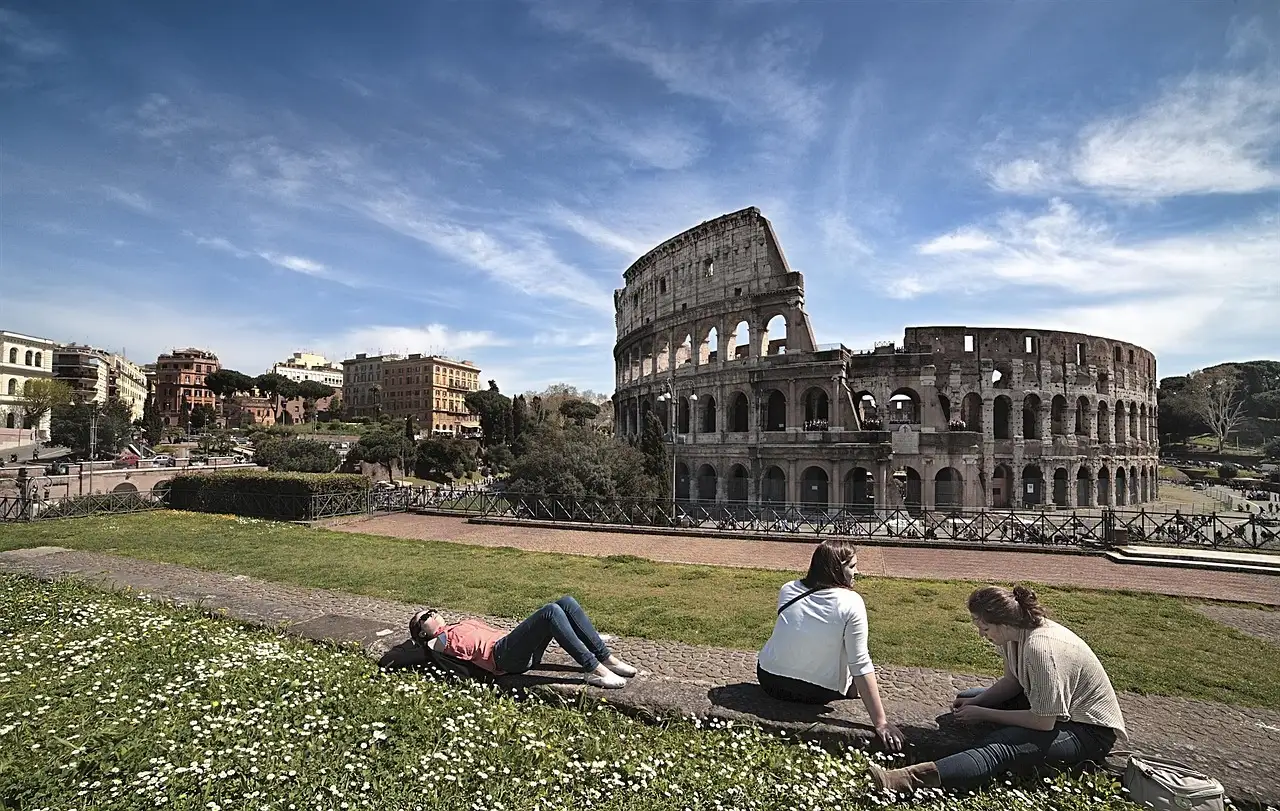
The best time to visit Rome is April, or the early autumn weeks of September and October, when days are warm but not hot. Summer reaches 30 °C and more, and November is the wettest month. This guide gives the weather for every month, the hotel price pattern by month, and what to book ahead in each season.
Best time to visit Rome: the short answer
The best time to visit Rome is April, with September and early October next. In those weeks the average daytime high is between 17.7 °C and 26.5 °C, which is good weather for walking all day. The long-term averages below come from the World Meteorological Organization's Rome climate table, which uses data from the Italian Air Force Meteorological Department.
Three things decide your month: weather, crowds and the hotel bill. Weather is easy to measure. Crowds are not, because none of the official pages we opened (the Colosseum, the Vatican Museums and the city's tourist tax page) publishes monthly visitor counts. For crowds we say what is known and mark what is not: the Colosseum's official page publishes no busiest months or visitor numbers and only asks the public to avoid forming queues. So we cannot name the most crowded month from official data. What the official pages do publish are free and closed days, which are listed in Step 4.
| Step | What to do | What to watch for |
|---|---|---|
| 1 | Decide what matters most | Weather, crowds and price rarely agree |
| 2 | Read Rome's weather by month | Heat above 30 °C in July and August, rain in autumn |
| 3 | Check the hotel price pattern | The study covers November 2026 to September 2027 only |
| 4 | Pick your month | April is the all-round winner |
| 5 | Plan for the season | Book the Colosseum ahead, keep one indoor plan |
Key Takeaway April is the best time to visit Rome for most people: a 17.7 °C average high, 9.2 rain days, and no summer heat. January is the cheapest month for a 4-star hotel in our study, and July and August are the hottest, with highs above 30 °C.
Step 1: Decide what matters most
Decide first whether you want warm weather, thin crowds or a low hotel bill, because no single month wins all three. Spring and early autumn give the best walking weather. Winter gives the lowest hotel prices. Summer gives the longest days and the most heat.
If you have a fixed holiday week, skip to Step 5, because every month can work with the right plan. If your dates are open, read Steps 2 and 3 before you book flights.
Step 2: Read Rome's weather by month
Rome is warm and dry from June to August and cool and wet from October to February. The table uses the WMO's long-term averages for the Roma Fiumicino station, which cover 1971 to 2000. The station sits near the coast, so the city itself can feel a little hotter on summer afternoons.
| Month | Average high | Average low | Rain days | Rainfall |
|---|---|---|---|---|
| January | 11.9 °C | 3.1 °C | 7.0 | 66.9 mm |
| February | 13.0 °C | 3.5 °C | 7.6 | 73.3 mm |
| March | 15.2 °C | 5.2 °C | 7.6 | 57.8 mm |
| April | 17.7 °C | 7.5 °C | 9.2 | 80.5 mm |
| May | 22.8 °C | 11.6 °C | 6.2 | 52.8 mm |
| June | 26.9 °C | 15.3 °C | 4.3 | 34.0 mm |
| July | 30.3 °C | 18.0 °C | 2.1 | 19.2 mm |
| August | 30.6 °C | 18.3 °C | 3.3 | 36.8 mm |
| September | 26.5 °C | 15.2 °C | 6.2 | 73.3 mm |
| October | 21.4 °C | 11.3 °C | 8.2 | 113.3 mm |
| November | 15.9 °C | 6.9 °C | 9.7 | 115.4 mm |
| December | 12.6 °C | 4.2 °C | 8.0 | 81.0 mm |
Summer is the dry season, but it is also the hot one. July has the least rain, with 19.2 mm over about 2 days, and August brings the highest average high, 30.6 °C. Autumn is the other way round. October and November each get more than 110 mm of rain. Added up, the twelve months give about 804 mm a year over roughly 79 rain days.
Spring is the middle ground. March is cool at 15.2 °C and fairly dry. May is warm at 22.8 °C with 52.8 mm of rain. Winter is cold at night but rarely freezing, since the January average low is 3.1 °C.
Pro Tip In July and August, start sightseeing at opening time and rest from 1 pm to 4 pm. The Vatican Museums open at 8:00 am, and the Colosseum opens at 8:30 am in winter, so ask the official page for the summer hour when you book.
Step 3: Check the hotel price pattern
Hotel prices in Rome swing a lot between the cheapest and the priciest month. In Rome, a 4-star hotel night cost a median €76 per room for two in January 2027, against €215 in May 2027, in the 2026 Rome Travel Cost Study.
The study only looked at stays from November 2026 to September 2027. So "cheapest" means cheapest inside that window, and we have no price for October 2027. Add Rome's tourist tax on top. For a 4-star hotel it is €7.50 per person per night, for up to 10 nights.
If you want a central base in any month, the Hotel Albergo Santa Chiara sits by the Pantheon, and the Nerva Boutique Hotel is steps from the Colosseum. Our where to stay in Rome guide compares the areas.
Step 4: Pick your month
Pick April if you want one answer, because it has mild highs, no heat and few reasons to cancel a plan. Here is our verdict for every season.
| Months | Verdict | Why |
|---|---|---|
| December to February | Best for low prices | Highs of 11.9 to 13.0 °C and cold nights, with January the cheapest 4-star month in our study |
| March | Good, a little cool | 15.2 °C and the least rain of the cool months |
| April | Best overall | 17.7 °C, but 9.2 rain days, so pack a light rain jacket |
| May | Very good, priciest for 4-star hotels | 22.8 °C and 52.8 mm of rain, with the top hotel prices in our study |
| June | Good, getting hot | 26.9 °C and only 34.0 mm of rain |
| July and August | Hardest | Highs above 30 °C and the least rain |
| September | Very good | 26.5 °C, still warm, rain starts to return |
| October | Good, bring a coat | 21.4 °C but 113.3 mm of rain |
| November | Wettest | 115.4 mm of rain and 9.7 rain days |
On crowds, no official page we found gives monthly visitor numbers. What the official pages do show is when sites are free or closed, and both change the crowd on a given day. The Colosseum is free on the first Sunday of each month and on 25 April, 2 June and 4 November, so expect long lines on those days.
The limit of this guide: the climate numbers are 1971 to 2000 averages from one airport station. Recent summers can run hotter, so treat the July and August figures as a floor, not a ceiling. If you cannot cope with heat, Rome in summer is the wrong choice.
The best month to visit a city is the one whose weather you can plan around.
Step 5: Plan for the season
Plan one booked sight and one indoor backup for your month, because Rome's weather and queues both change by season. In busy months, book the Colosseum before anything else. The official site sells tickets from 30 days before the visit, and the booked time cannot be changed.
Should you take a tour or go alone? You can buy the official 24-hour ticket yourself for €18, or take a guide. Go alone if you only want entry and are happy with the signs. Take the guide if you want the 2.5 hours of explanation, which the entry ticket does not include, or a set meeting time in a busy month. Official tickets are issued in the holder's name, so keep an ID with you at the entrance. The Colosseum, Roman Forum and Palatine Hill guided tour is run by Crown Tours and lasts 2.5 hours. It is from €49 per person, rated 4.8 from 93,507 reviews, lists free cancellation, and is not suitable for wheelchair users. The listing has 2 meeting points, and which one you get depends on the option you pick. It lists no group size, only a small-group option. It does not include transportation, food and drinks, or tips. The guided price covers the Colosseum, Forum and Palatine entry, so you do not buy the €18 ticket on top. If you only want entry, book your Rome Colosseum tickets early in spring, summer and September.
Prices and ratings as shown on GetYourGuide on 25 October 2026.
For the heat or the rain, go indoors. The Vatican Museums entrance ticket is sold by GetYourGuide Tours & Tickets GmbH and lasts 2 to 5 hours. It is from €33 per person, rated 4.5 from 159,306 reviews, and has no free cancellation. The listing places the start at the Vatican Museums, and it does not include a guided tour or the St. Peter's Basilica dome. The museums are closed on Sundays, except the last Sunday of the month, and on 1 November, 8 December and 25 and 26 December. See our Vatican Museums tickets page for the options.
In winter and on wet autumn days, a cooking class keeps you dry. The pasta and tiramisu class is run by Cooking Italy and takes 2.5 to 3 hours. It is from €25 per person, rated 4.9 from 8,798 reviews, and lists free cancellation. The listing has 6 meeting points that depend on the option, and no group size. It is not suitable for vegans or for people with gluten or lactose intolerance.
In July and August, walk at night. The small-group night walking tour is run by Global Experiences by Carpe Diem Tours Group. It takes 2.5 hours, is from €25 per person, rated 4.8 from 1,053 reviews, and lists free cancellation. It has 2 meeting points that depend on the option, lists no group size, and does not include entry to any attraction.
In April, May, September and October, add a day out of the city. The Villa d'Este and Hadrian's Villa day tour is run by Enjoy Rome and runs 1.5 to 7 hours depending on the option. It is from €65 per person, rated 4.5 from 2,490 reviews, and lists free cancellation. It has 2 meeting points that depend on the option, lists no group size, and does not include pick-up and drop-off or tips. For more choices, see day trips from Rome.
Things to Do in Rome's count of GetYourGuide listings in October 2026 found 398 listings with free cancellation (of 440), from €6.3, which makes it easy to keep a weather-dependent plan flexible.
Prices and ratings as shown on GetYourGuide on 25 October 2026.
Pick your month, then pick a plan that fits its weather
For a hot day or a wet one, the Vatican Museums entrance ticket is from €33 and the pasta class is from €25. For warm evenings, the small-group night walk is from €25, and the Colosseum, Forum and Palatine tour is from €49.
-
Colosseum, Forum and Palatine guided tour
from €49 per person
The one sight that sells out in busy months, in a 2.5-hour guided visit.
2 h 30 min 4.8 (93,507 reviews) Free cancellation
Run by Crown Tours · not suitable for people with mobility impairments, wheelchair users
Check availability: Colosseum, Forum and Palatine guided tour on GetYourGuide -
Vatican Museums entrance ticket
from €33 per person
An indoor day for the hottest weeks and for rain.
2–5 hours 4.5 (159,306 reviews)
Sold by GetYourGuide Tours & Tickets GmbH · not suitable for children under 7 years
Check availability: Vatican Museums entrance ticket on GetYourGuide -
Pasta and tiramisu class
from €25 per person
A dry plan for winter and wet autumn days.
2.5–3 hours 4.9 (8,798 reviews) Free cancellation
Run by Cooking Italy · not suitable for children under 2 years, children under 3 years, vegans, people with gluten intolerance, babies under 1 year, people with lactose intolerance
Check availability: Pasta and tiramisu class on GetYourGuide -
Small-group night walking tour
from €25 per person
Cooler streets and lit monuments on hot summer evenings.
2 h 30 min 4.8 (1,053 reviews) Free cancellation
Run by Global Experiences by Carpe Diem Tours Group · not suitable for wheelchair users
Check availability: Small-group night walking tour on GetYourGuide -
Villa d'Este and Hadrian's Villa day tour
from €65 per person
A day out of the city in the mild spring and autumn months.
1.5–7 hours 4.5 (2,490 reviews) Free cancellation
Run by Enjoy Rome · not suitable for wheelchair users
Check availability: Villa d'Este and Hadrian's Villa day tour on GetYourGuide
Prices and ratings as shown on GetYourGuide on 25 October 2026.
Colosseum tours and tickets with the Roman Forum and Palatine HillFAQ
What is the weather like in Rome, Italy?
When is the best time to visit Rome?
What is the weather like in Rome, Italy, in November?
What is the weather like in Rome, Italy, in March?
Conclusion
For most visitors, April is the best time to visit Rome, with September and early October close behind. Choose January or February if the hotel bill matters more than warm weather, and avoid July and August unless you plan around the heat. Whatever month you pick, book the Colosseum ahead and keep one indoor plan for a rainy day.
Related guides
Sources
- World Meteorological Organization, World Weather Information Service: Rome, station Roma Fiumicino, data from the Italian Air Force Meteorological Department (2026), last checked 25 October 2026
- Parco archeologico del Colosseo, Opening times and tickets (2026), last checked 25 October 2026
- Vatican Museums, Opening hours (2026), last checked 25 October 2026
- Roma Capitale, Tourist contribution rates (2023), last checked 25 October 2026