Secret Things to Do in Rome: 7 Quieter Places
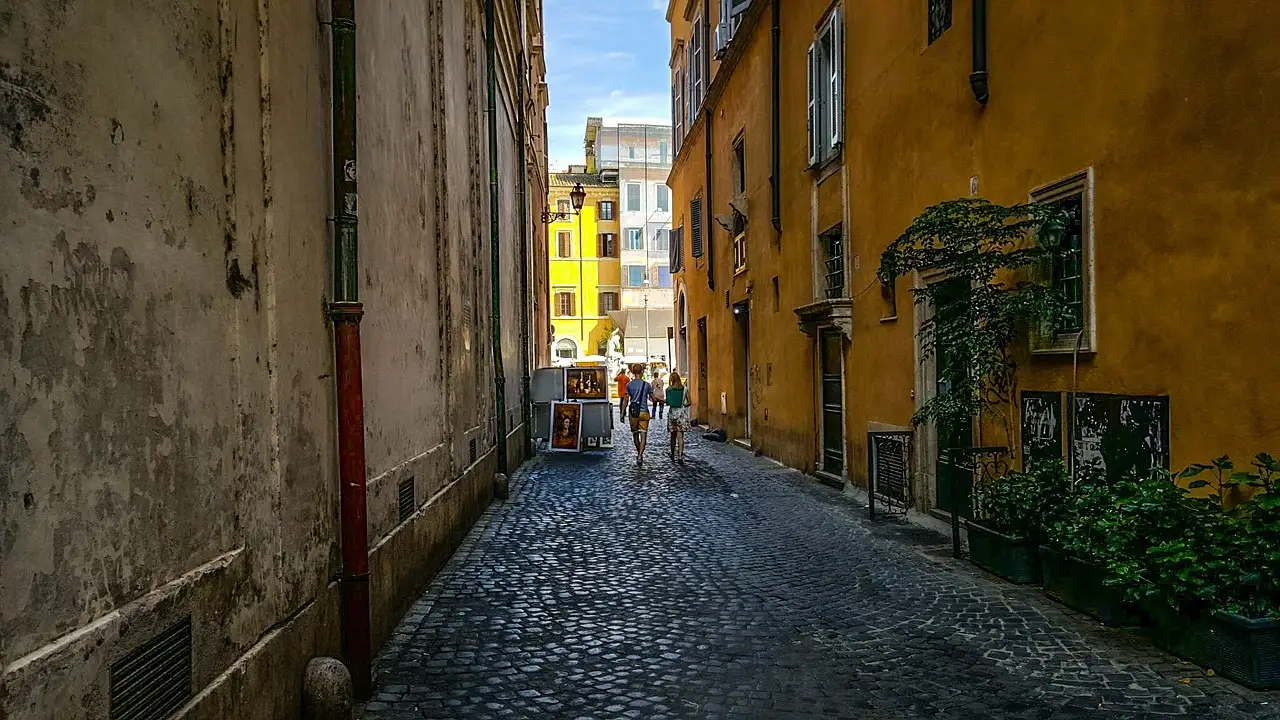
Secret things to do in Rome are the sights that limit entry with timed slots or booked tickets, or sit outside the centre, and seven of them are below. We found no official visitor count for any of these places, so quiet here means that the rules or the distance keep numbers lower.
1. Domus Aurea: Nero's buried palace, open three days a week
The Domus Aurea is Nero's palace, and you can enter it only on Fridays, Saturdays and Sundays. The Colosseum park's Domus Aurea page says visits start every 15 minutes from 9:00 a.m. to 4:30 p.m., with the last admission at 3:30 p.m. A group holds at most 25 people, guide included. The page does not say where the entrance is or how to reach it, so take the meeting point from your booking. The opening times page adds that the palace is closed on the first Sunday of the month.
The Domus Aurea stays small because of its timing. Visits are timed, and the group limit keeps each one short of a crowd. The ticket alone costs €18, and the ticket with an educational tour and virtual reality costs €26.
A tour is worth it here only for a smaller group; if group size does not matter to you, the official ticket with an educational tour and virtual reality costs €26 against €70 for the small group. The Domus Aurea guided tour with virtual reality is run by C.I.S. Tours. The tour lasts 1.5 hours and takes up to 8 people. It meets at the Colosseum (the listing gives "Colosseo, 00184 Roma" and no more exact spot). The listing includes the Domus Aurea ticket, a guided tour, the virtual reality experience and all taxes and fees, and it names nothing as excluded. Prices start at €70 per person, and the rating is 4.6 from 306 reviews. The listing says it is about 10 degrees inside, so bring a jacket. It has no free cancellation, only a partial refund up to 3 days before, and it is not suitable for people with claustrophobia or mobility impairments, or for wheelchair users.
Prices and ratings as shown on GetYourGuide on 25 October 2026.
2. San Clemente: three layers of Rome under one church
The Basilica of San Clemente lets you walk down from a 12th-century church to a 4th-century church and then to a first-century area with a temple of Mithras. Its Italian-language page says the dig needs an online booking, because the number of daily entries is limited. Booking online is the only way to be sure of entry and to choose your date and time.
The basilica opens Monday to Saturday from 9:00 to 12:30 and from 14:00 to 18:00, with the last entry 30 minutes before each break and closing. On Sundays and holidays it opens from 12:00 to 18:00. An adult ticket is €10, and students with a student card up to age 26 pay €5. Children up to 16 enter free with parents, but only together with a full ticket.
You go on your own. The basilica says it offers no guided visits and hands you a brochure with the route at the door. The entrance is on Piazza San Clemente, a five-minute walk from the Colosseum.
San Clemente is the one church on this list, and we found no official list of other lesser-known churches. The tourist office does describe one more: Santa Maria del Priorato, on the same square as the keyhole, which Piranesi rebuilt in 1765 as a funeral chamber for the Grand Priors of the Order of Malta. Its page gives no opening hours or ticket rule. For a viewpoint, Rome's tourist office names the keyhole of the gate of the Priory of the Knights of Malta on the Aventine hill, at Piazza dei Cavalieri di Malta. It says the keyhole frames the dome of St. Peter's at the end of a tree-lined avenue. The Aventine page puts the keyhole at number 3, while the page for the priory church lists the church at number 4, and neither states opening hours, so check on site. For a second viewpoint, the same office names the Parco Savello on the Aventine, which looks toward Monte Mario and the Janiculum.
3. Capuchin Crypt: the best known unusual sight
The Capuchin Museum and Crypt is open every day, and it is the best known unusual sight on this list, so do not expect it to be empty. The €10 official crypt ticket is part of the tour price, so the tour's extra cost pays mainly for the catacomb ticket and the bus. The museum's own page lists a full ticket at €10 and a reduced ticket at €6.50, with the audio guide included. Tickets bought online cost €1.50 more each.
Opening hours are 9:30 to 13:30 and 14:30 to 18:30. The last entry is at 12:30 in the morning and 17:30 in the afternoon. The museum also offers its own guided visit for groups. You must email a week ahead, and it costs €90 plus the entry tickets.
Is a tour worth it? The audio guide is already in the ticket, so the tour mainly buys the transport and a second site. The Capuchin Crypt and catacombs tour with transfer is run by City Wonders Ltd. Expect 2.5 to 3.5 hours. Prices start at €49 per person, and the rating is 4.6 from 7,559 reviews. It meets at Piazza Barberini, by the Triton fountain at the Barberini metro stop on line A. The listing includes the crypt and museum ticket, an audio guide, a catacomb ticket and bus transport. The group is private or small, and the listing gives no fixed size. Hotel pickup and drop-off and tips are not included. It has free cancellation and is not suitable for people with mobility impairments or wheelchair users.
Prices and ratings as shown on GetYourGuide on 25 October 2026.
4. Appian Way and catacombs: countryside inside the city
The Appian Way is a long walk through countryside that starts about one kilometre from the Colosseum. The Appia Antica Regional Park's Italian-language home page says its 4,580 hectares make it the largest urban protected area in Europe. It calls the old road an open-air museum of more than 16 km that can always be walked, with the ruins of imperial villas and aqueducts on either side.
Several catacombs lie along it, and all are visited with a guide. San Sebastiano is open Tuesday to Sunday from 9:15 to 17:15, with the last admission at 16:45. The visit lasts 40 to 45 minutes, and a ticket is €10 on site or €12 online. Domitilla is open every day except Tuesday, from 9:00 to 12:00 and from 14:00 to 17:00, and its ticket includes a guided tour at €10. We could not open the official San Callisto page, and guides disagree on its closing day, so check its hours before you go.
For a ticket and a guide in one booking, the Catacombs of St. Callixtus entry ticket and tour is run by Opera Romana Pellegrinaggi. Tickets start at €14 per person, rated 4.6 from 3,761 reviews. Duration is listed as 30 minutes, with free cancellation and a meeting point at Via Appia Antica 110/126. The listing gives no group size. The price covers the ticket and a guided tour, while hotel pick-up and drop-off and food and drinks are not included. The tour is not suitable for people with mobility impairments or claustrophobia.
To see the open road, the Appian Way and aqueducts e-bike tour is run by TopBike Rental & Tours. Four hours in a small group start at €55 per person, rated 4.9 from 232 reviews. The price covers the e-bike, a helmet, a guide and water. You meet at Via Labicana 49, and cancellation is free. Hotel pickup and drop-off and optional tips are not included. For more routes on two wheels, see our Rome bike tours page.
Prices and ratings as shown on GetYourGuide on 25 October 2026.
5. Centrale Montemartini: ancient statues among old machines
The Centrale Montemartini is a museum of ancient sculpture inside a former power plant at Via Ostiense 106. Its history page says sculptures from the Capitoline Museums moved here in 1997, while those museums were being renovated. The show put ancient art next to industrial machines, and it became a permanent museum in 2001. A hall for the carriages of the Train of Pius IX opened in November 2016.
The practical information page says it is open Tuesday to Sunday from 9:00 to 19:00, with the last admission one hour before closing. It is closed on Mondays, on 1 May and on 25 December. A same-day adult ticket is €11 and a concession ticket is €6.50. Online pre-sale adds a €1 fee, and the ticket page also lists the Roma Pass.
You can go on your own. We found no tour of this museum in our list. Via Ostiense is also where Rome's tourist office places trattorias, so it pairs well with lunch (see the food section below).
6. Quartiere Coppedè: fairy-tale buildings in a few streets
Quartiere Coppedè is a small district of fantasy buildings between Via Salaria and Via Nomentana. Turismo Roma says it has 26 small palaces and 17 detached houses, built between 1915 and 1927 by the architect Gino Coppedè. It lies a stone's throw from the old city centre.
The page names three things to look for. A tall arch joins the two ambassadors' palaces. The Fontana delle Rane, a fountain with 12 frogs, stands in Piazza Mincio. The Palazzina del Ragno carries a large spider on its facade, and the Villino delle Fate mixes marble, brick, travertine, terracotta and glass. The page lists no ticket or opening hours, so check the area on a map and walk it on your own. It does not call the district quiet, but it calls it "a corner of Rome which is most surprising for its bizarre architecture" and adds that it is "not a district at all, in the true sense of the word", so it is small enough to walk in one go. In short, the tourist office calls no district quiet. Its own walking route is the Aventine hill: from Piazza dei Cavalieri di Malta along Via di Santa Sabina to the Parco Savello (the Garden of the Oranges), then down to the Circus Maximum view near the Municipal Rose Garden. Garbatella, San Lorenzo and Ostiense are named only for food.
7. Rome at night: two guided walks after dark
A night walk shows you the old streets without the daytime queues, and two small-group tours cover it. The Rome After Dark small-group night walking tour is run by Carpe Diem Tours. The walk takes 2.5 hours and starts at €40 per person, rated 4.8 from 293 reviews. Group size depends on the option, from a small group of up to 8 to a standard group of up to 15, and a private option takes up to 15. The meeting point varies with the option you pick, so take it from your booking. No attraction entry is included. Cancellation is free, and the walk is not suitable for wheelchair users.
For something shorter, the Ghosts, Legends and Haunted History night tour is run by Landmarks and Laughs. Eighty minutes start at €23 per person, rated 4.9 from 100 reviews. It meets at Via del Banco di Santo Spirito 25, and the listing calls it a small group without giving a number. The guide tells the story of Beatrice Cenci and passes the Campo de' Fiori execution site. Churches are closed at that hour, so church entrances are excluded, as are transport to and from attractions, food and drinks, and optional tips. Cancellation is free. Guests with heart problems and wheelchair users are not advised to book.
If you would rather walk alone, check the last metro first. Rome's mobility agency says lines A, B and C run their last trains at 23:30 from Sunday to Thursday, and at 1:30 from the terminals on Friday and Saturday. The public transport guide covers tickets and lines. For more guided walks by day and night, see our guide to Rome daily tours.
Prices and ratings as shown on GetYourGuide on 25 October 2026.
Pro Tip Book the Domus Aurea for a Friday or Saturday morning and San Clemente for the same afternoon. The dig takes entries until 17:30 on weekdays and Saturdays, and both sites are close to the Colosseum.
How to choose secret things to do in Rome
Choose by the day you have, because opening days decide most of this list. Things to Do in Rome's count of GetYourGuide listings in October 2026 found 29 catacomb, crypt, underground and Domus Aurea tours, from €12.50.
| Place | Open | Adult ticket | Entry rule |
|---|---|---|---|
| Domus Aurea | Friday to Sunday | €18, or €26 with tour and virtual reality | Timed visit every 15 minutes |
| San Clemente | Daily, Sundays from 12:00 | €10 | Online booking required for the dig |
| Capuchin Crypt | Daily | €10 with audio guide | Online tickets sold, €1.50 fee |
| San Sebastiano catacombs | Tuesday to Sunday | €10 on site | Guided visit only |
| Centrale Montemartini | Tuesday to Sunday | €11 | Same-day tickets at the desk |
| Quartiere Coppedè | No hours listed | No ticket listed | Walk the streets |
| Night walks | Evenings | From €23.21 | Book a tour |
Key Takeaway Book the Domus Aurea, open only Friday to Sunday, and the San Clemente dig, which needs an online booking, before anything else. The other five places need less planning.
A place with timed entry and a daily limit is easier to enjoy than one with an open door.
When the famous Pantheon is still the right choice
The Pantheon is still the right choice if you want a short, central stop, and you can plan it with facts. The Ministry of Culture's Pantheon page says a full ticket costs €7 since 1 July 2026, with a €2 reduced ticket for ages 18 to 25. Entry is free for under-18s and on the first Sunday of the month. It is open daily from 9:00 to 19:00, with the last entry at 18:30.
Entry is in order of arrival, and the page lists no skip-the-line option. Our page on the Pantheon of Rome compares the tickets and tours you can book.
A list of quiet places is the wrong choice if you have only one day. These places are spread across the city, and several need a booking or close on a Monday.
Is any part of Rome a no-go zone?
No part of Rome is named as off limits in the UK government's Italy travel advice, updated on 21 October 2026. The page says crime levels are generally low, with more petty crime such as bag-snatching and pickpocketing in city centres and at major tourist attractions.
The advice asks you to take care in poorly lit or unfamiliar areas, including road underpasses. That matters for night walks and for the Appian Way after dark. It also tells you to avoid protests and to keep your belongings in sight on public transport.
Food near the quiet places: what Rome is known for
Rome is known for carbonara, amatriciana and gricia pasta, and for offal dishes. Turismo Roma calls the offal cuts the "fifth quarter" and names rigatoni with pajata and coratella with artichokes as examples.
The tourist office lists no single must-eat restaurant and publishes no secret spots that locals use; it names districts, not venues. It points to the working-class districts of Trastevere and Testaccio, which are quite central, and to Garbatella, San Lorenzo and Ostiense, which lie slightly further out. It also names Borgo, near the dome of St. Peter's, and Monti, the oldest district. Ostiense is the district of the Centrale Montemartini. For a guided tasting, see our Rome food tours page.
No official page we could read defines a typical Roman breakfast. The tourist office calls the maritozzo, a sweet bun filled with fresh cream, a classic way to start the day, and says it is now eaten beyond breakfast too. The page names no bakery or bar, only that cafes and bistros show it in their windows, so there is no official list of where to eat it; ask nearby which one bakes its own.
Pick a quiet place, then choose a guide or go alone
The six tours we picked are from €14 per person on GetYourGuide, from a €14 catacomb ticket to a €70 Domus Aurea tour with virtual reality. Each one is for a place on this list, and each entry below says who runs the tour, its rating and its cancellation rule. Each entry also gives the meeting point and group size as the listing states them. Two places need no tour: San Clemente and the Centrale Montemartini are visited on your own.
-
Domus Aurea guided tour with virtual reality
from €70 per person
A small group of up to 8 inside Nero's buried palace, open on Fridays, Saturdays and Sundays only.
1 h 30 min 4.6 (306 reviews)
Run by C.I.S. Tours. · not suitable for people with mobility impairments, people with claustrophobia, wheelchair users
Check availability: Domus Aurea guided tour with virtual reality on GetYourGuide -
Capuchin Crypt and catacombs tour with transfer
from €49 per person
The crypt and a catacomb in one half-day, with the bus ride to the catacombs included.
2.5–3.5 hours 4.6 (7,559 reviews) Free cancellation
Run by City Wonders Ltd. · not suitable for people with mobility impairments, wheelchair users
Check availability: Capuchin Crypt and catacombs tour with transfer on GetYourGuide -
Appian Way and aqueducts e-bike tour
from €55 per person
The countryside side of the Appian Way, with a guide and an e-bike for four hours.
4 hours 4.9 (232 reviews) Free cancellation
Run by TopBike Rental & Tours · not suitable for babies under 1 year
Check availability: Appian Way and aqueducts e-bike tour on GetYourGuide -
Catacombs of St. Callixtus entry ticket and tour
from €14 per person
The lowest priced way into a catacomb on the Appian Way.
30 minutes 4.6 (3,761 reviews) Free cancellation
Run by OPERA ROMANA PELLEGRINAGGI · not suitable for people with mobility impairments, people with claustrophobia
Check availability: Catacombs of St. Callixtus entry ticket and tour on GetYourGuide -
Rome After Dark small-group night walk
from €40 per person
Central Rome after sunset, with a small-group option.
2 h 30 min 4.8 (293 reviews) Free cancellation
Run by Carpe Diem Tours · not suitable for wheelchair users
Check availability: Rome After Dark small-group night walk on GetYourGuide -
Ghosts and legends night tour
from €23 per person
A short 80-minute evening walk about the darker side of the old streets.
80 minutes 4.9 (100 reviews) Free cancellation
Run by Landmarks and Laughs · not suitable for people with heart problems, wheelchair users
Check availability: Ghosts and legends night tour on GetYourGuide
Prices and ratings as shown on GetYourGuide on 25 October 2026.
Pantheon tickets and toursFAQ
What are some off-the-beaten-path tours in Rome?
Are there any no-go zones in Rome?
What food is Rome known for?
Where is a must-eat in Rome?
What is a typical Roman breakfast?
What is the Aventine Keyhole?
Conclusion
The best secret things to do in Rome are the ones with fixed entry. Book the Domus Aurea (open Friday to Sunday) and the San Clemente dig first, then add the Appian Way, the Centrale Montemartini or a night walk around them. The Capuchin Crypt is well known, so plan for company there. Check each opening day before you go, because several of these places close on Mondays.
Related guides
Sources
- Parco archeologico del Colosseo, Domus Aurea opening hours and tickets (2026), last checked 25 October 2026
- Parco archeologico del Colosseo, Opening times and tickets (2026), last checked 25 October 2026
- Basilica di San Clemente, Orari e informazioni utili (2026), last checked 25 October 2026
- Museo e Cripta dei Cappuccini, Acquista i biglietti (2026), last checked 25 October 2026
- Parco Regionale dell'Appia Antica, Benvenuti (2026), last checked 25 October 2026
- Catacombe di Roma, Tickets for the catacombs of Rome (2026), last checked 25 October 2026
- Musei Capitolini Centrale Montemartini, Practical information and Tickets (2026), last checked 25 October 2026
- Musei Capitolini Centrale Montemartini, History of the museum (2026), last checked 25 October 2026
- Turismo Roma, Quartiere Coppedè (2026), last checked 25 October 2026
- GOV.UK, Italy travel advice: safety and security (2026), last checked 25 October 2026
- Turismo Roma, Traditional cuisine (2026), last checked 25 October 2026
- Turismo Roma, Aventino (2026), last checked 25 October 2026
- Turismo Roma, The Church of Santa Maria del Priorato (2026), last checked 25 October 2026
- Turismo Roma, The maritozzo (2026), last checked 25 October 2026
- Ministero della Cultura, Pantheon (2026), last checked 25 October 2026