Domus Aurea: Is Nero's Palace Worth Seeing?
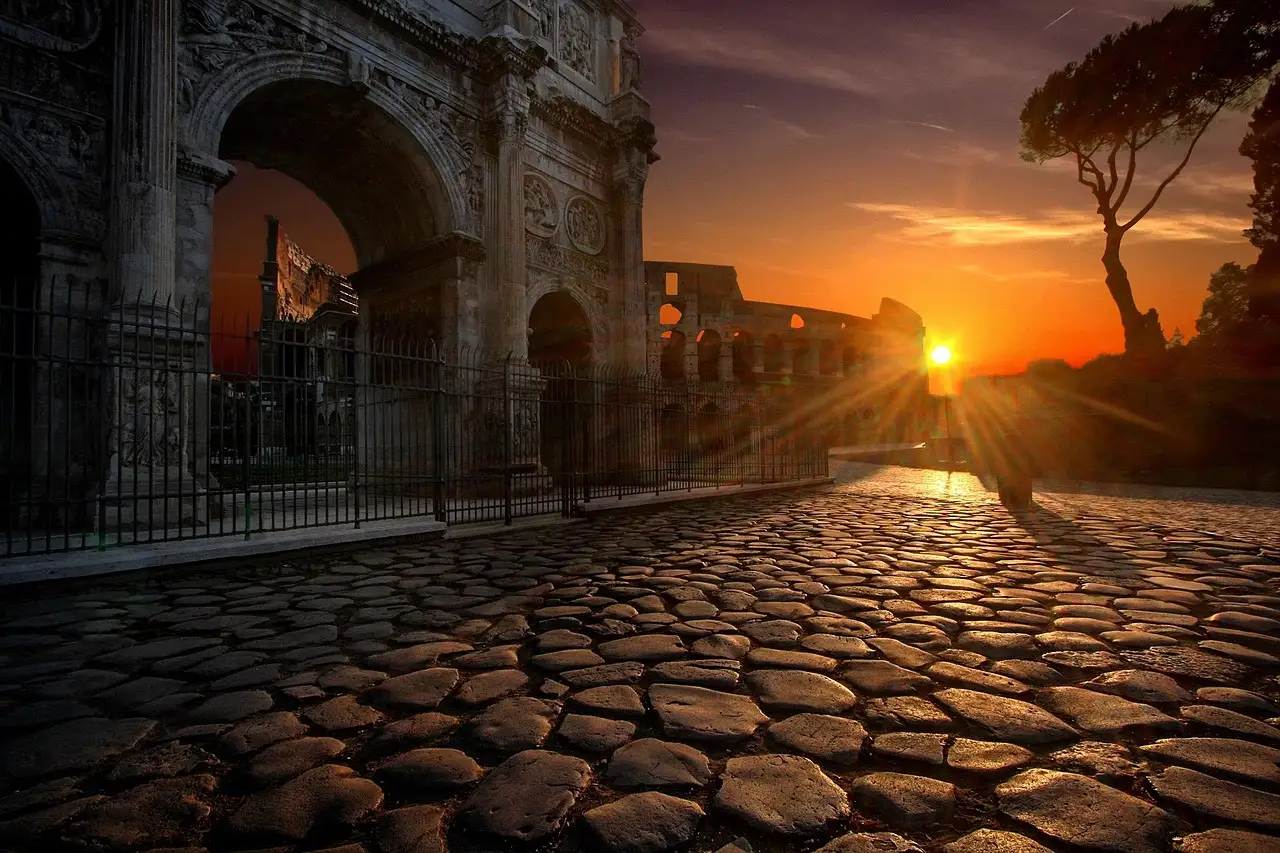
The Domus Aurea is Nero's Golden House, a palace buried under Rome's Oppian Hill, and it is worth seeing if you enjoy Roman wall paintings and do not mind a cool, timed visit. It opens only on Fridays, Saturdays and Sundays. This guide shows what is left of the palace, what the visit costs and how to book it.
Step 1: Know what the Domus Aurea was
Nero's Golden House was a palace, a huge complex of halls, gardens and an artificial lake that he began after the fire of 64 AD. The Colosseo park says its lake lay in the valley where the Colosseum stands today. It also lists baths, banquet rooms and a round dining room that turned on itself.
"Domus" is the Latin word for a house, and "aurea" means golden. In Rome, a domus was the town house of a wealthy family. The park at Ostia Antica calls one such house a domus and says it replaced an older insula, a plain dwelling.
Nero's domus was far bigger than a house. The park's Palatine page names a row of imperial palaces on that hill: the Domus Tiberiana, the Domus Transitoria, the Golden House and the Domus Flavia. Of these, Nero's is the one most visitors have heard of.
| Name | What it was | Can you visit? |
|---|---|---|
| Domus Aurea | Nero's palace after the fire of 64 AD | Yes, Friday to Sunday |
| Domus Tiberiana | The first real imperial palace, on the Palatine | Yes, with a Palatine ticket |
| Domus Transitoria | An earlier palace of Nero | No, not open |
Step 2: Decide if the Domus Aurea is worth seeing
The Domus Aurea is worth seeing if you want to stand inside a real Roman palace and see its painted walls. Skip it if you expect gold, marble and statues. After Nero died, his successors stripped the rooms and filled them with earth, says the park.
What you see today are rooms on the Oppian Hill, probably used for feasts and banquets. They stayed buried until the Renaissance, when artists such as Raphael climbed in to copy the wall decoration. Their name for the painted style, "grotesques", still stands.
Key Takeaway Nero's palace shows you bare rooms and old paintings, about 10 degrees inside, not its gold. It suits readers who like Roman art and history.
The park also sells a visit with virtual reality, which rebuilds the palace on a screen. That helps, because the rooms alone are empty. Plan on a jacket, since the park warns the temperature inside is around 10 degrees.
The visit is the wrong choice in a few cases. The listed tour is not suitable for people with claustrophobia, mobility impairments or wheelchair users. The park's FAQ adds that the Domus Transitoria, a nearby site, cannot be visited.
A buried palace teaches more about Rome than a restored one, because you see what the city chose to hide.
Step 3: Check the days, hours and how to get there
The palace opens only on Fridays, Saturdays and Sundays, with visits every 15 minutes from 9:00 a.m. The ticket page gives 3:30 p.m. as the last admission. Its monument page shows slightly different hours, so trust the slot on your ticket.
The park also lists closing days, including 2 November, 4 November and 7 December. Closures can come with little notice. On 14 and 16 February 2026 the palace closed because the city shut its parks and the Colle Oppio gates stayed locked. Check the park's news before you go.
The entrance is at Viale della Domus Aurea 1, inside Colle Oppio park, with the gate on Via Labicana. The how to get here page lists Metro Line B to Colosseo, Metro Line C to Colosseo-Fori Imperiali, buses 51, 85 and 87, and tram 3. For tickets and passes on those lines, see our Rome public transport guide.
Pro Tip Book a Friday or Saturday morning slot. Arrive 20 minutes early, bring a jacket, and carry no bag, since the GetYourGuide listing says luggage and food are not allowed.
Step 4: Choose your ticket, official or guided tour
The cheapest way in is the park's own ticket, and a guided tour costs more but is bundled. On the official page, a ticket with an educational tour and virtual reality costs €26. A ticket only is €18 full price, and €2 for EU citizens aged 18 to 25. The 24h Colosseum ticket does not cover Nero's palace, so you buy it on its own.
The guided tour with virtual reality is run by C.I.S. Tours and is from €70 per person. It is rated 4.6 from 306 reviews and lasts 1.5 hours in a small group of up to 8. The listing includes the ticket, the guide and the virtual reality experience, and it meets at Colosseo. Tours run in English, Italian, Spanish and French.
Check the fine print before you book. The listing has no free cancellation, only a partial refund, and it needs every guest's name.
Prices and ratings as shown on GetYourGuide on 25 October 2026.
| Option | Price | What you get |
|---|---|---|
| Official ticket only | €18 | Entry, no tour or virtual reality |
| Official ticket with tour and virtual reality | €26 | Entry, an educational tour and virtual reality |
| Guided tour on GetYourGuide | From €70 | Ticket, guide, virtual reality, small group |
So is a tour worth it? Not for the entry alone. If you want the cheapest visit, use the official page. A guided tour makes sense when official slots are full or you prefer a small group booked in one step.
Things to Do in Rome's count of GetYourGuide listings in October 2026 found 2 Domus-named tours (Domus Aurea and Domus Tiberiana), from €70.
Step 5: Add the Colosseum, Forum or Palatine
Nero's palace fits well in a morning with the Colosseum, because its lake once filled the valley where the arena stands. Our Colosseum tours and tickets with the Roman Forum and Palatine Hill page compares the main options.
On your own, the Colosseum, Forum and Palatine entry with audio guide is from €33 per person. It is rated 4.3 from 5,568 reviews and takes 2.5 hours. The audio guide is digital, there is no live guide, and it is not suitable for wheelchair users.
For a guide, the Colosseum underground and arena floor tour is from €63.25 per person. It is rated 4.5 from 110 reviews and lasts 2 to 3 hours. The underground rooms are included only on the Underground option. If you want a smaller group, see the Colosseum underground tours page.
A second option is the Colosseum arena and Roman Forum small-group tour, run by CityEyes Private Tours. It is from €129 per person, rated 4.8 from 735 reviews, lasts 3 hours and has up to 10 guests. It covers the Forum but not a guided Palatine tour.
Prices and ratings as shown on GetYourGuide on 25 October 2026.
If you prefer a quieter palace, the Palatine has the Domus Tiberiana. You enter the open part with a 24h Colosseum, Forum and Palatine ticket. The halls need a supplement, says the park.
| Step | What to do | What to watch for |
|---|---|---|
| 1 | Learn what Nero's palace was | It is a buried palace, not a house |
| 2 | Decide if it is worth it | No gold left, about 10 degrees inside |
| 3 | Check days and the route | Friday to Sunday only, closing days |
| 4 | Pick the official ticket or a tour | €26 official with tour, €70 guided tour |
| 5 | Pair it with the Colosseum | Different tickets for each |
Pair Nero's palace with the Colosseum
The guided tour of Nero's palace with virtual reality is from €70 per person on GetYourGuide. For the Colosseum next door, our picks start at €33 for an entry ticket with audio guide and go up to €129 for a small-group arena tour.
-
Guided tour of Nero's palace with virtual reality
from €70 per person
The only listed tour that goes inside Nero's palace, with the ticket and a guide included.
1 h 30 min 4.6 (306 reviews)
Run by C.I.S. Tours. · not suitable for people with mobility impairments, people with claustrophobia, wheelchair users
Check availability: Guided tour of Nero's palace with virtual reality on GetYourGuide -
Colosseum underground and arena floor tour
from €63 per person
The Colosseum is next door, and this tour adds the rooms under the arena.
2–3 hours 4.5 (110 reviews) Free cancellation
Run by Let's See Italy · not suitable for wheelchair users, people over 95 years, people over 140 kg (309 lbs), people over 70 years
Check availability: Colosseum underground and arena floor tour on GetYourGuide -
Colosseum, Forum and Palatine entry with audio guide
from €33 per person
The lowest-priced way to see the Colosseum, Forum and Palatine on your own.
2 h 30 min 4.3 (5,568 reviews) Free cancellation
Run by Nicom Tours · not suitable for people with mobility impairments, wheelchair users
Check availability: Colosseum, Forum and Palatine entry with audio guide on GetYourGuide -
Colosseum arena and Roman Forum small-group tour
from €129 per person
A guided small group of up to 10 guests for readers who want a guide in the Colosseum.
3 hours 4.8 (735 reviews) Free cancellation
Run by CityEyes Private Tours · not suitable for people with mobility impairments, wheelchair users
Check availability: Colosseum arena and Roman Forum small-group tour on GetYourGuide
Prices and ratings as shown on GetYourGuide on 25 October 2026.
Colosseum tours and tickets with the Roman Forum and Palatine HillFAQ
What were ancient Roman homes called?
What was Nero's palace in Rome?
Is the Domus Aurea worth seeing?
What does domus mean in English?
What is the most famous Roman domus?
Conclusion
The Domus Aurea is worth a Friday, Saturday or Sunday morning if you like Roman paintings and can handle a cold, enclosed visit. Book a timed slot, bring a jacket and check the park's closing days first. Skip it if you want gold and marble, or if tight spaces make you uneasy.
Related guides
Sources
- Parco archeologico del Colosseo, The Domus Aurea (2026), last checked 25 October 2026
- Parco archeologico del Colosseo, Domus Aurea tickets (2026), last checked 25 October 2026
- Parco archeologico del Colosseo, How to get here (2026), last checked 25 October 2026
- Parco archeologico del Colosseo, The Palatine (2026), last checked 25 October 2026
- Parco archeologico del Colosseo, Domus Tiberiana (2026), last checked 25 October 2026
- Parco archeologico del Colosseo, Closure of the Domus Aurea, 14 and 16 February 2026 (2026), last checked 25 October 2026
- Ostia Antica Parco Archeologico, Domus dei Dioscuri (2026), last checked 25 October 2026