Circus Maximus: Worth Seeing, Tickets and Hours
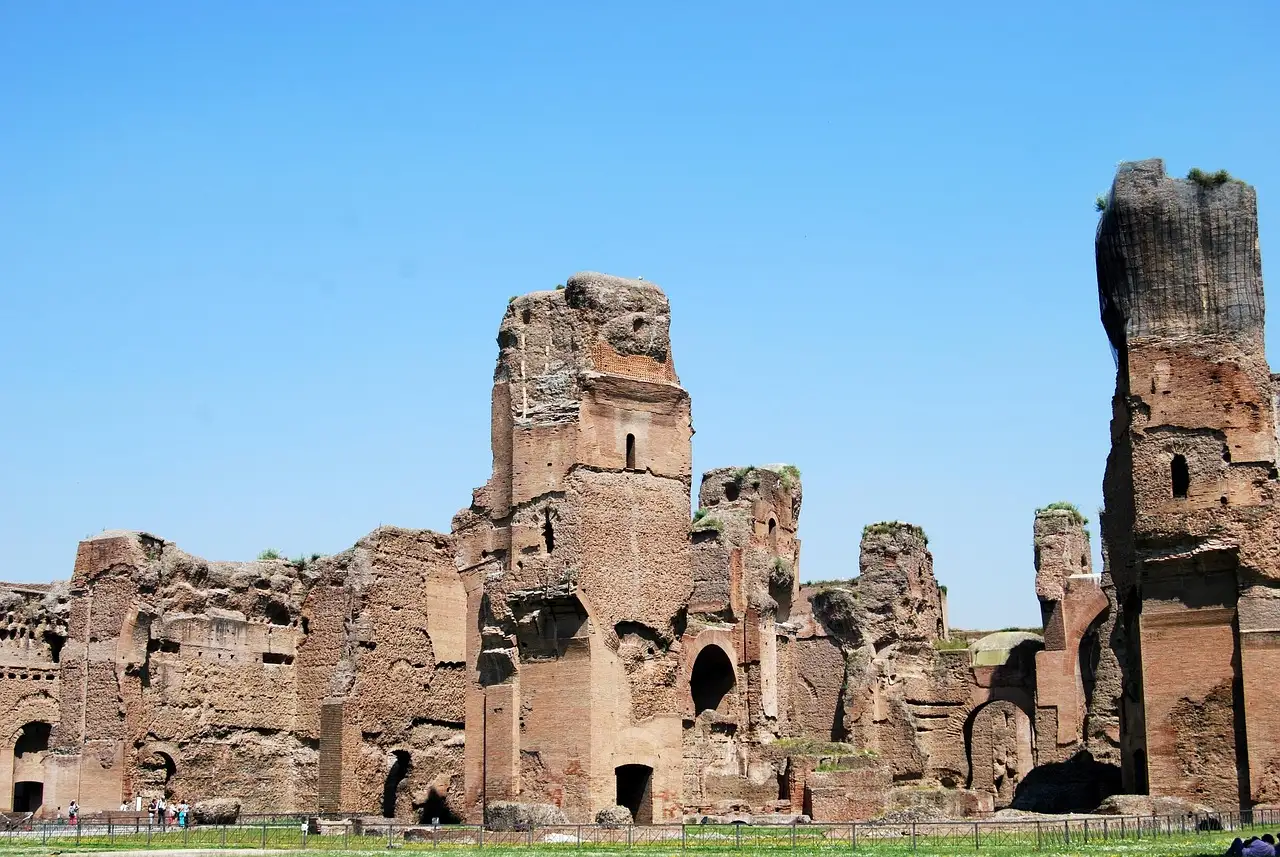
The Circus Maximus is a long, open valley in Rome where chariots once raced, and it is worth a short stop but not a long visit. Little of the stone seating is left, so the place works best as a quick look on the way between bigger sights. Below you find what you can see for free, what needs a ticket, the opening hours, and the nearby Baths of Caracalla, which many visitors enjoy more.
Circus Maximus today: what is left to see
Today the Circus is a flat, grassy valley between the Palatine and Aventine hills, with a few ruins at one end. Rome's tourism site says it was 600 metres long and 140 metres wide, and it calls it the largest building for public entertainment in antiquity.
Races were the most popular sport in Rome. Teams raced in four colours, green, blue, red and white, and the crowd sat by the colour it backed. The valley also hosted triumphs, processions and public executions.
Fires damaged the Circus several times. It was almost fully rebuilt under the emperor Trajan, and most of the structures you can still see date from his reign. The site was used until the early sixth century, and later it was farmland, then a gasworks, until the archaeological park began in the early 1900s.
Inside the archaeological area you can walk through galleries that led to the seats. You can follow the old paving stones past rooms that were shops and inns. A medieval tower, the Torre della Moletta, stands at the edge, and a staircase inside it leads to a viewpoint over the whole area.
Rome came to watch chariot races in the valley and gladiator fights in the Colosseum.
Is the Circus Maximus worth seeing?
Yes, the Circus is worth seeing as a short stop, but it is not a highlight on its own. The track has no standing seats, so you see its scale rather than its stone. A first-time visitor with one day for ancient Rome should do the Colosseum, Forum and Palatine first.
Three cases make a stop worthwhile. You pass by on the way between the Palatine and the Aventine, you want open space after crowded sites, or you want the story of chariot racing. For the story, the Experience below does the most with an empty field.
Key Takeaway The track was 600 m long and 140 m wide, but only a small part is ruins. The archaeological area costs €7, the Experience costs €12, and the open valley has no ticket listed.
Circus Maximus tickets and opening hours
The open valley has no ticket listed, and the archaeological area costs €7. Rome's tourism site lists the site as always open. The city's page for the tower and archaeological area sets the rules for the paid part.
From the last Sunday of October, which is 25 October this year, the paid area opens Tuesday to Sunday from 9:30 to 16:00, and the last entry is at 15:00. From the last Sunday of March to the last Saturday of October it is open 9:30 to 19:00, with last entry at 18:00. It is closed on Mondays, 25 December and 1 May. Entry is in limited numbers, and the city strongly recommends buying online or by phone at 060608, which is staffed daily from 9:00 to 19:00.
The Circo Maximo Experience is a separate ticket. You wear a headset and walk eight stops in about 40 minutes. It shows the valley filling with buildings, the shops, a chariot race, and the Arch of Titus rebuilt at full size, about 20 metres high. The narration comes in eight languages, including English.
| What | Price | Hours from 25 October 2026 | Good to know |
|---|---|---|---|
| Open valley | No ticket listed | Listed as always open | You see the size, not the ruins |
| Archaeological area and tower | €7 full, €4 reduced, free for residents of Rome and its area | Tue to Sun, 9:30 to 16:00, last entry 15:00 | Limited numbers, closed Monday |
| Circo Maximo Experience | €12 full, €10 reduced, €22 family | Tue to Sun, 10:00 to 16:00 every 15 minutes, last entry 14:50 | Cancelled in rain, arrive 15 minutes early |
The Experience is closed on Mondays and cancelled in rain, per its own page. The city's page for the paid area says its ticket does not include the Experience.
Pro Tip Go on a Tuesday to Sunday before 15:00 from now until late March. The last entry to the paid area is 15:00, and the city page says the number of visitors is limited.
How to get to the Circus Maximus
The easiest way to get there is the metro: Line B has a stop called Circo Maximo. The Experience's site gives the entrance on Viale Aventino and a bus stop named Aventino (Circo Massimo).
Metro lines A, B and C run from 5:30. On Roma Servizi per la Mobilita's timetable page, the last train leaves at 23:30 from Sunday to Thursday and at 1:30 on Fridays and Saturdays. For ticket types and day passes, see our Rome public transport guide.
On foot, it sits next to the Palatine and the Aventine. From the Colosseum you walk along the valley, but no official page gives a walking time, so plan on a stroll rather than a sprint.
Circus Maximus vs the Colosseum: how much bigger?
The Circus was about three times as long as the Colosseum, but a little narrower. The Colosseum is 189 metres long and 156 metres wide, per Rome's tourism page. The same page says it could hold about 50,000 spectators. The Circus measured 600 metres by 140.
Rome's tourism pages give no seat count for the Circus, so none is stated here. The two buildings also stood for different shows. The Circus was for chariot races, and the Colosseum was an amphitheatre for gladiator fights.
If you want the bigger and better preserved building, the Colosseum is the better ticket. The official 24-hour ticket costs €18 and also covers the Roman Forum and the Palatine, according to the Colosseum park's ticket page. Our picks for the Colosseum with the Forum and Palatine are listed under the tours section below.
Baths of Caracalla: the ruins that stand tall
The Baths of Caracalla are the better stop if you want walls you can see. The city's tourism site calls them one of the largest and best preserved bath complexes of antiquity, built between 212 and 216 AD. The same site groups the Aventine, the Baths and the Circus into one route, called Aventino - Terme di Caracalla - Circo Massimo.
The Ministry of Culture page gives the full ticket as €8, and €2 for ages 18 to 25. Under-18s go in free. A €2 supplement applies when an exhibition runs, and a photography show is listed until 10 January 2027. The site is open Tuesday to Sunday and closed on Mondays. From 26 October the hours are 9:00 to 16:30, with last admission at 15:30, according to Turismo Roma.
You can buy tickets online on the Musei Italiani portal or app, or at machines at the gate, which take cards only. The ministry says the surface has no steps, so it is easy to walk. A reflecting pool recalls the old swimming hall, and the largest mithraeum in Rome, a temple in the underground, opens only for special events or visits.
No GetYourGuide listing in our October 2026 data sells Baths of Caracalla entry, so book through the official portal.
| Circus Maximus | Baths of Caracalla | |
|---|---|---|
| What remains | Grassy valley, galleries, a medieval tower | The central bath block, a reflecting pool |
| Entry | €7 for the archaeological area | €8, plus €2 when an exhibition runs |
| Winter hours | Tue to Sun, 9:30 to 16:00 | Tue to Sun, 9:00 to 16:30 |
| Closed | Mondays, 25 December, 1 May | Mondays |
Tours that show the Circus Maximus
On a tour you see it only as a stop on a longer route, because no listing sells entry to it. Things to Do in Rome's count of GetYourGuide listings in October 2026 found 6 listings that mention the Circus Maximus, from €19.90.
The guided Colosseum, Forum and Palatine tour is run by Ivo Tours and takes 2.5 to 3 hours. It is from €39 per person, rated 4.5 from 29,538 reviews. It includes the Palatine Hill, which borders the valley of the Circus, and the listing offers free cancellation. It is not suitable for people with mobility impairments or wheelchair users.
If you would rather lead yourself, the Colosseum, Forum and Palatine entry with audio guide is run by Nicom Tours and lasts about 2.5 hours. It is rated 4.3 from 5,568 reviews and comes with a digital audio guide, no live guide. Check the price on the listing, because it changes by date.
Prices and ratings as shown on GetYourGuide on 25 October 2026.
For a moving look, the City Highlights bike or e-bike tour is run by Fat Tire Tours - Italy. It takes 3 hours and is from €45 per person, rated 4.8 from 823 reviews. The listing says you cycle by the Circus and the Roman Forum. It does not go inside monuments, it runs in English only, and it is not suitable for pregnant women.
The sunset golf cart tour is run by Rome Local Experience. It takes 2.5 to 3 hours and is from €72 per person, rated 4.8 from 432 reviews. The listed stops include the Colosseum, the Circus and the Palatine Hill, and it ends at a sunset viewpoint on the Janiculum or Pincian Hill. The listing offers free cancellation.
Prices and ratings as shown on GetYourGuide on 25 October 2026.
Doing it yourself costs less. The Palatine is next door, the Experience is bookable on its own site, and the open valley needs no ticket. A tour pays off if you want one guide to connect the Circus, the Forum and the Colosseum in a single story.
When skipping the Circus Maximus makes sense
Skip the Circus if you have one afternoon and want ruins you can touch. The valley is flat and bare, and most of the old seating is gone. The ticketed area is small, and the best part of it is the Experience, which needs a headset and about 40 minutes.
Skip the paid Experience in the rain, because it is cancelled in bad weather. Skip it as well on a Monday, when the area and the Experience are both closed.
The Aventine keyhole is not covered, because no official page with its visiting rules was available. No official safety advice for the Circus itself was published either, so use the same care you would at any busy open space in Rome.
See the Circus Maximus as part of a bigger day
No GetYourGuide listing sells entry to the Circus Maximus itself. Our picks pass it or look over its valley: a guided Colosseum, Forum and Palatine visit from €39, a 3-hour bike tour from €45 and a sunset golf cart tour from €72.
-
Colosseum, Forum and Palatine guided tour
from €39 per person
Includes the Palatine Hill, which borders the valley of the Circus, plus the Colosseum arena floor.
2.5–3 hours 4.5 (29,538 reviews) Free cancellation
Run by Ivo Tours · not suitable for people with mobility impairments, wheelchair users
Check availability: Colosseum, Forum and Palatine guided tour on GetYourGuide -
Colosseum, Forum and Palatine entry with audio guide
from €33 per person
A lower-cost way to walk the Palatine on your own before or after the Circus.
2 h 30 min 4.3 (5,568 reviews) Free cancellation
Run by Nicom Tours · not suitable for people with mobility impairments, wheelchair users
Check availability: Colosseum, Forum and Palatine entry with audio guide on GetYourGuide -
City highlights bike or e-bike tour
from €45 per person
The listing says you cycle by the Circus Maximus, so you see it without a long walk.
3 hours 4.8 (823 reviews) Free cancellation
Run by Fat Tire Tours - Italy · not suitable for pregnant women
Check availability: City highlights bike or e-bike tour on GetYourGuide -
Sunset golf cart tour
from €72 per person
The listed route passes the Circus Maximus and the Palatine Hill, with a sunset viewpoint at the end.
2.5–3 hours 4.8 (432 reviews) Free cancellation
Run by Rome Local Experience
Check availability: Sunset golf cart tour on GetYourGuide
Prices and ratings as shown on GetYourGuide on 25 October 2026.
Colosseum tours and tickets with the Roman Forum and Palatine HillFAQ
What are two interesting facts about the Circus Maximus?
How much bigger is the Circus Maximus compared to the Colosseum?
Is entry to the Circus Maximus free?
Is the Circus Maximus worth seeing?
Conclusion
Stop at the Circus Maximus for twenty minutes if you are passing by, buy the €7 ticket only if you like ruins and views, and book the Experience if you want to see the chariot track rebuilt on a headset. If you have a spare half day, put the Baths of Caracalla ahead of it. Check the winter hours first, because the paid area closes at 16:00 and on Mondays.
Related guides
Sources
- Roma Capitale Sovrintendenza, Torre della Moletta e area archeologica (2026), last checked 25 October 2026
- Turismo Roma, Circus Maximus (2026), last checked 25 October 2026
- Circo Maximo Experience, official site (2026), last checked 25 October 2026
- Turismo Roma, The Baths of Caracalla (2026), last checked 25 October 2026
- Ministero della Cultura, Terme di Caracalla (2026), last checked 25 October 2026
- Turismo Roma, Colosseum (2026), last checked 25 October 2026
- Parco archeologico del Colosseo, Colosseum, Roman Forum and Palatine ticket (2026), last checked 25 October 2026
- Roma Servizi per la Mobilita, Metro and rail lines and timetables (2026), last checked 25 October 2026